Most lending teams at banks spend a large share of their day moving work between systems. Product rules, applications, repayments and approvals are scattered across different platforms, and each function owner ends up as the glue that holds it all together.
That fragmentation has a cost. Days go on manual tasks that could instead go on the decisions that need taste and judgement. And most of those tasks are repetitive and rules-based, repeated across the same few systems every day.
Below are five places AI gives that time back to the team, a sixth concept to revamp how banks work with their policies, and what has to be true underneath for it all to work.
1. Launching and changing loan products
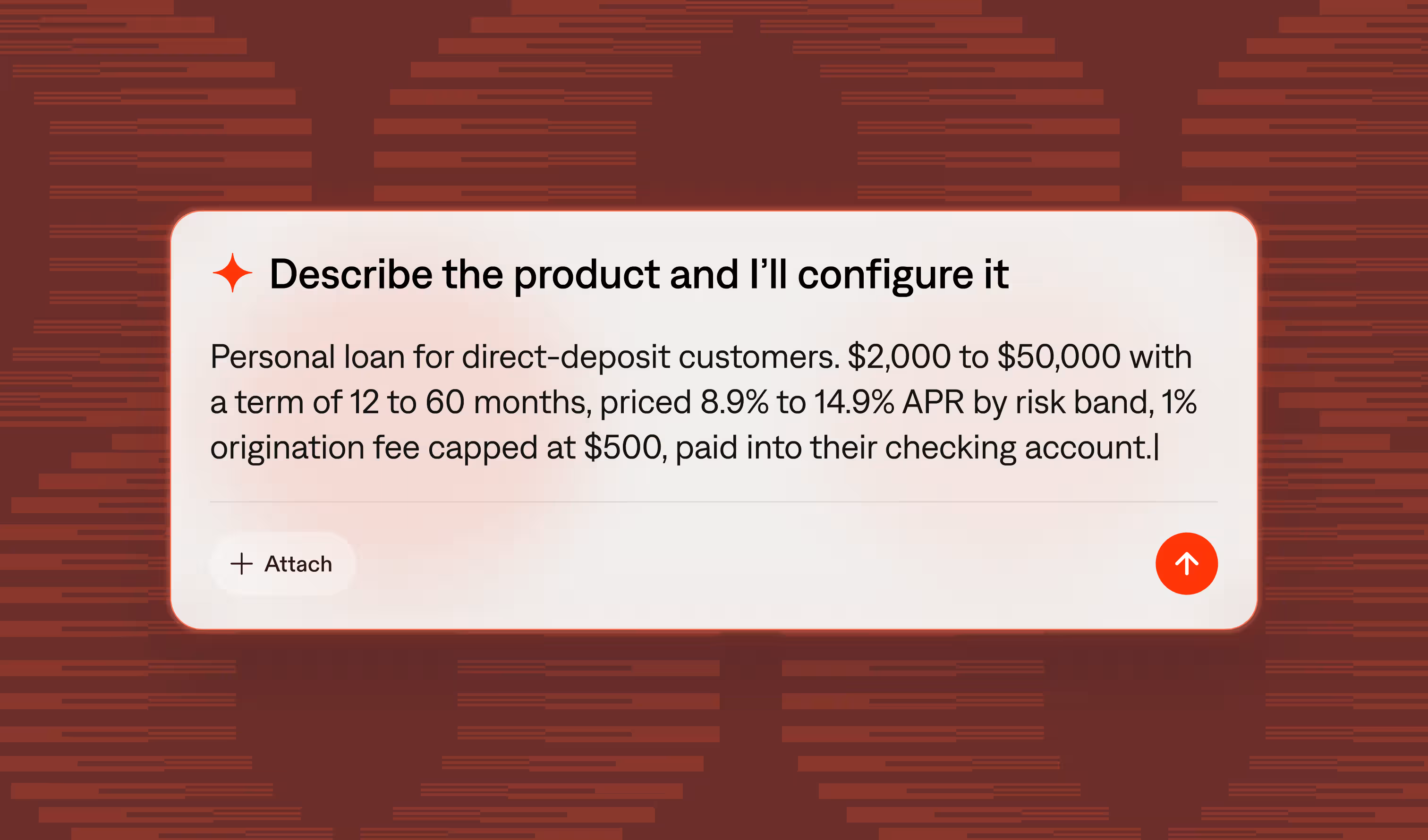
Setting up a new loan product at most banks takes weeks. A product manager writes a spec, IT turns it into a change request, and another individual configures dozens of settings by hand: amounts, tenors, pricing bands, fees, eligibility rules, deferral and rescheduling terms. Every later change, from a new fee to a pricing tweak, goes back through the same queue.
How AI unlocks: A product manager describes the product in plain language, for example a personal loan for salaried customers, 2,000 to 50,000 over 12 to 60 months, priced by risk band with a capped origination fee. The AI drafts every setting from that description and flags anything it needs clarified.
The team still owns the decision. Nothing goes live until the right person reviews and approves the draft, and every change is logged. What goes away is the re-keying between the spec and the system, which is where most launch time and most configuration errors come from.
2. Onboarding and document checks
A large share of an origination team's time goes on paperwork: reading payslips and bank statements, checking a trade licence, matching an ID to an application, and chasing the customer for the one document that is missing.
How AI unlocks: It can read the documents an applicant uploads, pull the fields the application needs, verify income from transaction history, and check identity data against the bank's KYC rules. When something is missing or does not match, it can ask the customer for it straight away instead of leaving the file in a queue.
The benefit shows up in two places. Applications reach an underwriter complete, and the underwriter spends their time on judgement instead of data entry. The cases that need a closer look, such as a mismatched name or an unusual income pattern, arrive flagged with the reason attached.
3. Credit decisions, with the reasons written down
Most loan applications are clear-cut. The applicant meets the policy, the score is comfortably above the threshold, and an underwriter approves it. The time goes on the borderline cases and on writing up why a decision was made.
How AI unlocks: It can take the clear-cut cases within limits the bank sets, for example approving personal loans up to a set amount for applicants inside the policy. Anything above that limit, or anything the policy does not cover, goes to an underwriter with a recommendation and the reasons behind it. The underwriter makes the call, and their override is recorded as well.
The record is important as well. Most lending regulators expect a bank to explain a decline in specific terms and to show how an automated decision was reached. If the AI stores the data it used, the rules that applied and who signed off, at the moment the decision is made, that explanation is ready when a customer, an auditor or a supervisor asks for it.
4. Servicing the loan after it is booked
A loan lives for years after it is written. Over the loan's tenor, customers ask to move a payment date because their salary landed late, pay part of it off early, or find out why this month's statement looks different. Each request touches the loan record, the payment schedule and often a fee or an interest calculation.
At many banks, those requests still go through a call centre, a form and a back-office queue.
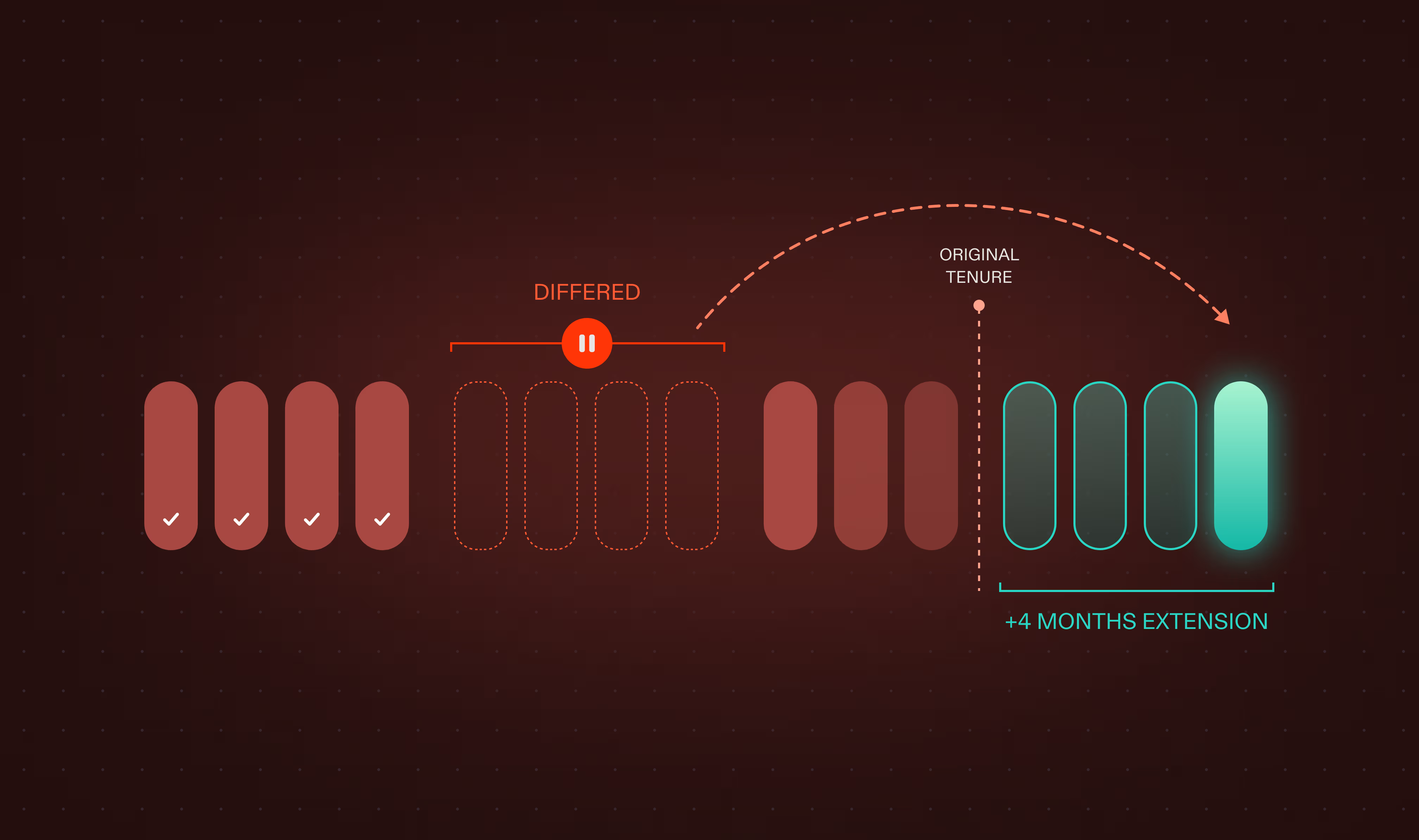
How AI unlocks: With access to the live loan record, AI can handle the routine ones directly: check the request against the product's rules, show the customer the new schedule, and make the change once it is confirmed.
Requests outside the rules, such as a deferral beyond the allowed limit or a hardship case, go to a person with the full history attached. The servicing team spends its time on the cases that need judgement, and customers get an answer the same day.
5. Collections
Collections teams often work from a daily list of overdue accounts and a single reminder schedule for everyone. A customer who missed one payment by two days gets the same treatment as one who is 60 days behind and has stopped answering.
How AI unlocks: It can sort that list by who is likely to pay, who needs a reminder, and who needs a conversation. It can send the routine reminders, follow up when a promise to pay is missed, and offer a payment plan that sits within the bank's policy. A customer in genuine difficulty is handed to a collector with the account history and every contact so far.
This matters for fair treatment as much as for recovery rates. Regulators expect banks to treat customers in arrears consistently, so each contact and each offer needs to be recorded. When the AI logs what it did and why, the collections team can show that every customer was treated under the same rules.
6. Govern the credit policy
At most banks, credit policy lives in a document. When the risk committee changes it, for example tightening sector limits and covenant thresholds for commercial borrowers or lowering the maximum debt-burden ratio for one retail segment, someone has to carry that change into every system and team it touches: origination rules, underwriting limits, servicing exceptions and collections offers. That can take weeks, and in the meantime different teams work to different versions of the same policy.
How AI unlocks: When eligibility, pricing, limits and approval rules are held as policy data rather than buried in code, agents carry out workflow changes end-to-end. A policy owner describes it in plain language, and the AI drafts the updated rules, limits and escalation paths it affects. It then runs the draft against recent applications and accounts to show the impact before anything goes live, for example how many approvals would have gone to an underwriter instead, or how many customers would have been offered a different payment plan. The policy owner reviews the draft and workflow updates, risk signs off as the second approver, and the change goes live across the loan lifecycle. For the first few weeks, the AI watches the decisions made under the new policy and flags anything that drifts from what the impact check predicted.
This is what a policy-driven operating model looks like in practice. The bank defines the rules, the controls and who decides what above each limit, and both people and AI agents work within them.
What has to be true underneath
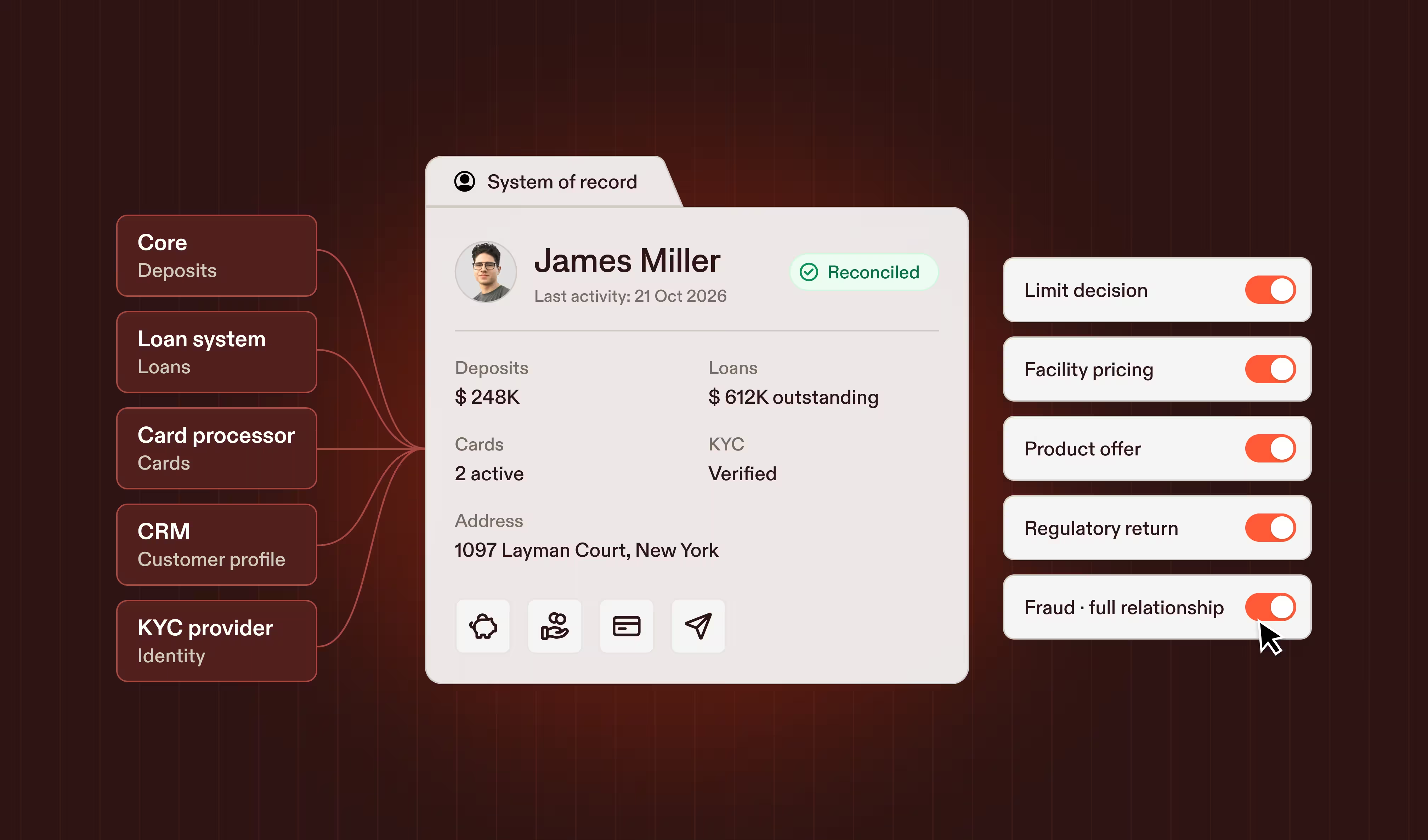
None of these six use cases work if the AI sits on top of the bank's systems, reading copies of the data. A copy can answer a question. It cannot move a payment date, book a loan or record an approval. For AI to do meaningful lending work, a few things need to be in place:
- Agents derive workflows from the policy. The operating model within which agents and humans work is defined by the credit policy, enabling banks to more effectively manage change and do so in real-time.
- It works on live records. The AI reads and changes the same loan accounts, schedules and ledgers the bank's products run on, through the same services.
- Every agent has an identity and limits. Each one has its own login, permissions scoped to its job, and hard limits on what it can do alone.
- People approve anything above the limits. Routine work runs within the limits the bank sets. Anything bigger goes to the right person, with maker-checker on product and policy changes.
- Everything is logged. Every question, action and approval is recorded with the reasoning, so risk and compliance teams can see what happened and who signed it off.
- Customer data stays protected. ID numbers, account numbers and contact details are masked before any model sees them, and the AI runs in-country or in a private cloud, on the model the bank chooses.
This is mostly a question of what the bank's lending stack is built on. Banks running a patchwork of older systems usually find these controls hard to add after the fact. On a modern lending platform, they can be part of the setup from day one.
The team stays in charge
In each of the five, the AI takes the routine work and the team keeps the judgement. Product managers approve the products. Underwriters decide the borderline cases. Collectors handle the customers who need a conversation. Lending teams already have people capable of much more than re-keying and chasing. Giving the routine work to AI, inside the bank's own rules, is how they get the time back to do it.